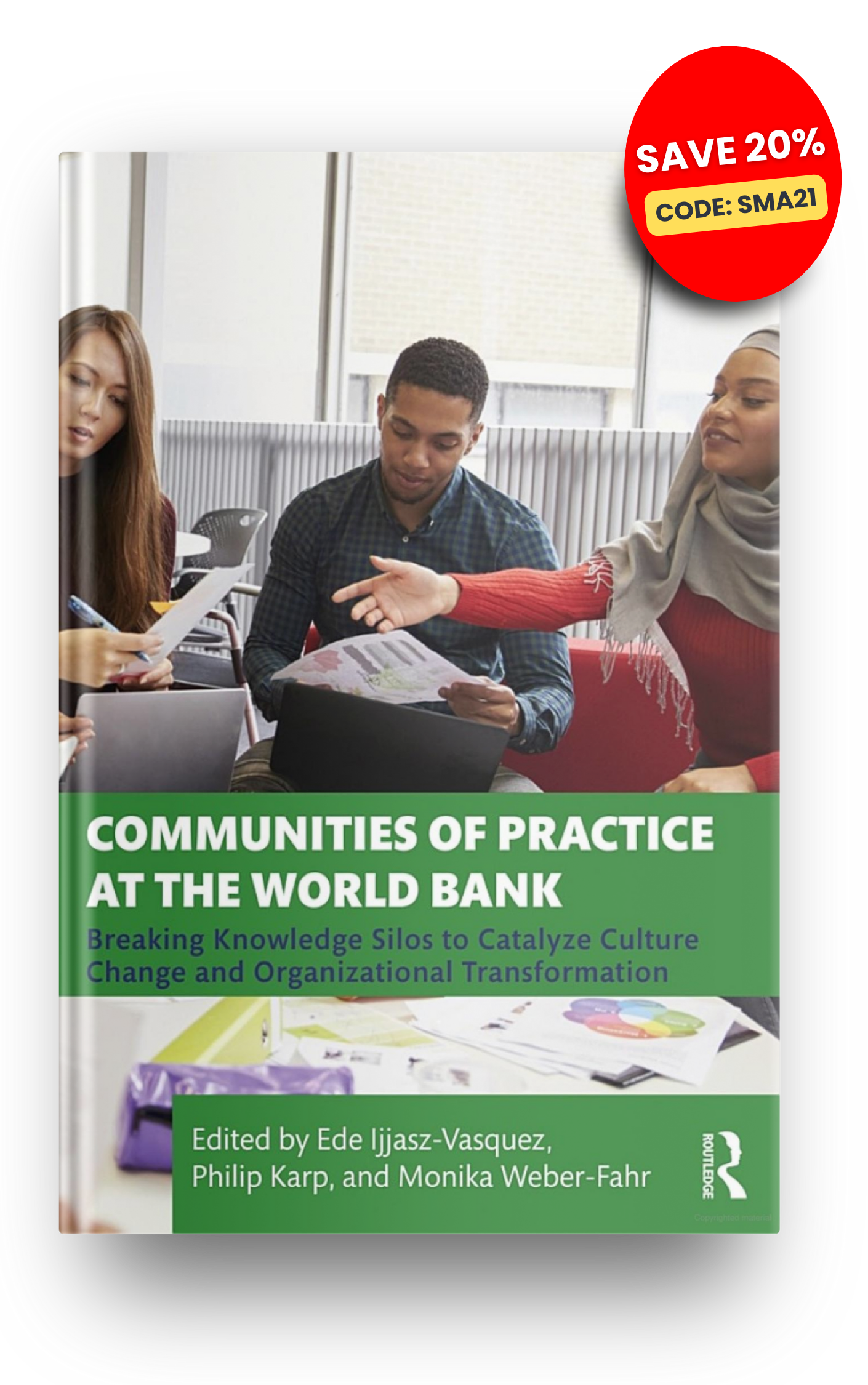



This book has compiled a veritable feast of practitioner learning, tools and methods, and dos and don’ts that will inform your organizational and knowledge management practices and decision-making. It is like inviting a community of peers to a conversation table paving the way for surprises, and inspiration.
Creating, curating, and disseminating knowledge is essential for maintaining the technical depth of any organization and for professional development of individuals. This book provides examples from the World Bank that will be helpful to other organizations and individuals that want to learn from on the leading organizations in knowledge management.
Understanding Risk contributed to make Disaster Risk Management “cool”, resulting in an increased participation of young professionals in an area that was previously the remiss of a few engineers, and catalyzing an entirely new generation of experts and practitioners to focus on a topic that is now at the forefront of the development agenda. Chapter provides some insights on how this happened.
The Archives story shares how accessible knowledge from the past—antidote to institutional amnesia—might nurture organizational strategic thinking.

This book is an essential companion to any large-scale change initiative in that it puts people back at the center of knowledge and learning technologies. What we need to navigate the questions and answers shaping our world are intelligent, agile, and purposeful communities that understand something about knowledge management.

To me, this book emphasizes the essence of a community of practice, which is to share and promote the spread of best practices to leverage knowledge and innovation. I hope that the chapter focusing on the Affordable Housing Community of Practice will help knowledge management specialist and organizations’ leaders with the practical solutions and tools to leverage communities of practice and place them at the center of their strategy and business development

Better managing and applying our knowledge is the only credible response to an an increasingly complex and uncertain world. This book provides great examples of how everyone can get engaged and make a difference.